What wear and tear does a wiring harness have to deal with?
Copper wire for electric current is surrounded by an insulating sheath. Many wires together are bundled with tape and/or a PVC sheath for extra protection. Over the years, wear and tear on wiring harnesses is inevitable. Several factors play a role in this. The surrounding insulation wears out mainly due to external influences. The internal copper wears out from the inside due to heat from the electric current. You cannot see this wear directly, but it has a negative impact on the flow of current. We also have to deal with corrosion that occurs at the contact points. We discuss this in more detail below.
- Besides wear and tear on the insulation, oxidation/corrosion also occurs externally. You can recognise this by the green colour on the copper. This is annoying because corrosion interferes with optimal current flow, reducing the car's electrical performance. The green oxidation creates a resistance, so to speak, that can cause all kinds of malfunctions. We explain this further on.
- From outside, you may also have to deal with pests. For instance, martens or mice may still want to crawl under the bonnet and gnaw on your cables. Solid PVC insulation or high-frequency tones can help prevent this.
Wiring harness wear due to internal influences
Wear and tear also occurs in electrical wiring from the inside. When a large current, running through a relatively thin wire for a long period of time, the copper will heat up. Each time this heating and cooling of the copper occurs, it causes the specific resistance of the copper core to increase. As the specific resistance increases, the wear process will also accelerate. After all, the extra resistance causes more heat generation and thus more wear. This is easily recognised by the dark discolouration of the copper. If you draw too much current through a wire for a long time, the insulation may even melt away.
In all wear types, quality plays a big role. For instance, BMW hardly ever used thin wires, while you find plenty of thin wires in cheaper cars. The copper of such a wiring harness from a BMW then usually still has a very nice copper colour after 10 or so years, while that of a cheaper car with thin wires is discoloured black. This is often the case with headlight wiring, for example, because it has to carry a relatively large and long-lasting current.
Consequences of wear and tear on your wiring
Electrical faults
Wear and tear on your wiring harness can cause various malfunctions. When wires break, you can have bad contacts that cause lights, sensors and other consumers to work sporadically. It can also cause engine failure if it's wires that control ignition or fuel, for example.
Transfer resistance by corrosion also gives all kinds of annoying malfunctions. You then have to deal with malfunctions such as:
- weak lighting
- Poor or no starting ability
- slow-moving wipers
- failing meters
- battery that does not charge, causing you to stand still
- a soft horn
- weak / flashing interior lights
- weak inflammation
- poor fuel supply
- or even engine failure as soon as you draw a lot of current with, for example, your heater fan
- etc.
Fire due to short circuit
Worse, wear and tear can also eventually cause the copper of the wires to become exposed. This can have major consequences. When the copper of a + wire touches the - circuit, which in most cars is the entire body, you are dealing with a full-blown short circuit. Such a high current then immediately flows that the insulation around the copper core melts or burns away almost instantly. Your electrical components can also be destroyed in one fell swoop. Today's cars are full of fuses that reduce this risk, but older cars often have hardly any fuses or none at all. Therefore, fire due to short circuits in older cars is certainly not an exception.
What do you look for when inspecting the cables and contacts?
Check the plugs and cable lugs
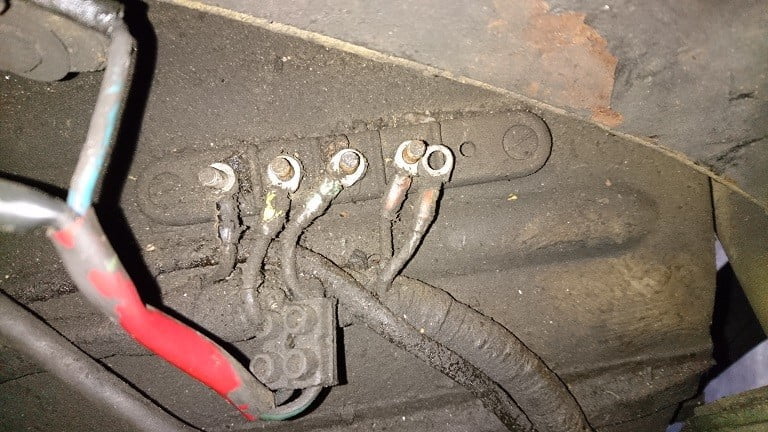
For all your electrical components in your car to function properly, it is important to check the plugs and connectors. Check that the contacts are not dirty, greasy or green from oxidation, as shown further below in the photo with the red plug. This creates resistance, impeding the flow of current. Where current is obstructed, heat builds up, which can melt plugs and insulation.
Thoroughly clean the plugs with the cable lugs in them. You can do this with a (tooth) brush or cloth and some brake cleaner, for example. Even better is to use contact spray. Contact spray also has a preventive effect against the formation of corrosion. If possible, you can also replace the terminal lugs completely. You will need the right tools for this.
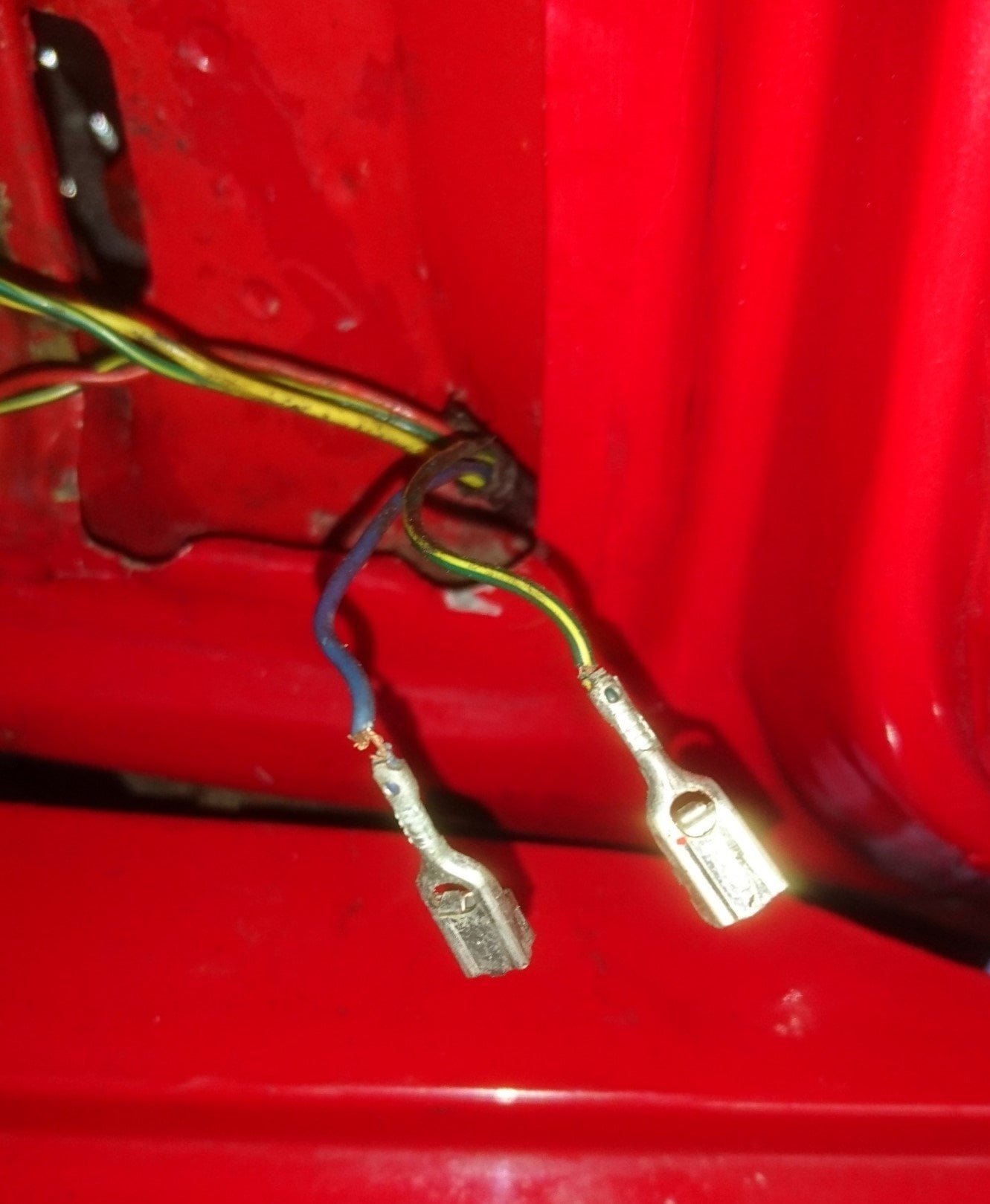
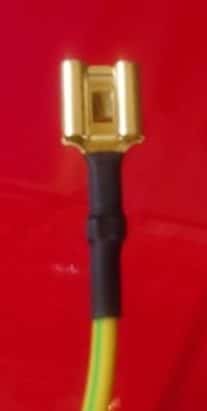
A known problem is that where the copper wire is clamped in the connector, the wire is damaged. Sometimes the cable lug is still only hanging on with a few copper wires. You can clearly see this further down below in the photo near the blue wire. Replace these contacts immediately, as it will cause problems sooner or later. Then add shrink tubing for strength.
Check all ground points
Also check all your earth points. Many wires often come together here. If such a ground point on your body gives resistance due to corrosion, you can expect all kinds of strange malfunctions as described above in the article. You can check whether a ground point is the culprit by running a wire from the negative side of the consumer directly to the negative of your battery. If the fault then disappears, the problem is in the ground. So clean your earth points well and remove all dirt, grease, rust and corrosion. Don't forget to clean the underside of the head of the bolt and any washers sitting on the bolt. Also remove any paint that impedes a direct connection between the bare body and the copper. If everything is clean, you can put a layer of Vaseline over it to avoid giving moisture, and therefore corrosion, a chance.
Search for wire breaks
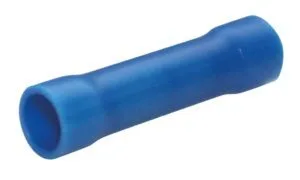
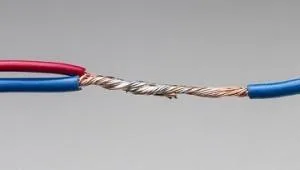
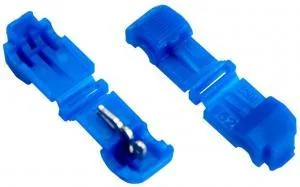
If you come across a wire break, do not use terminal blocks to connect the wires. These are proven places for corrosion to develop. It is best to attach the wire directly to the contact point. If that doesn't work because the wire is too short, you can draw a new wire or consider one of the options below.
Check the insulation
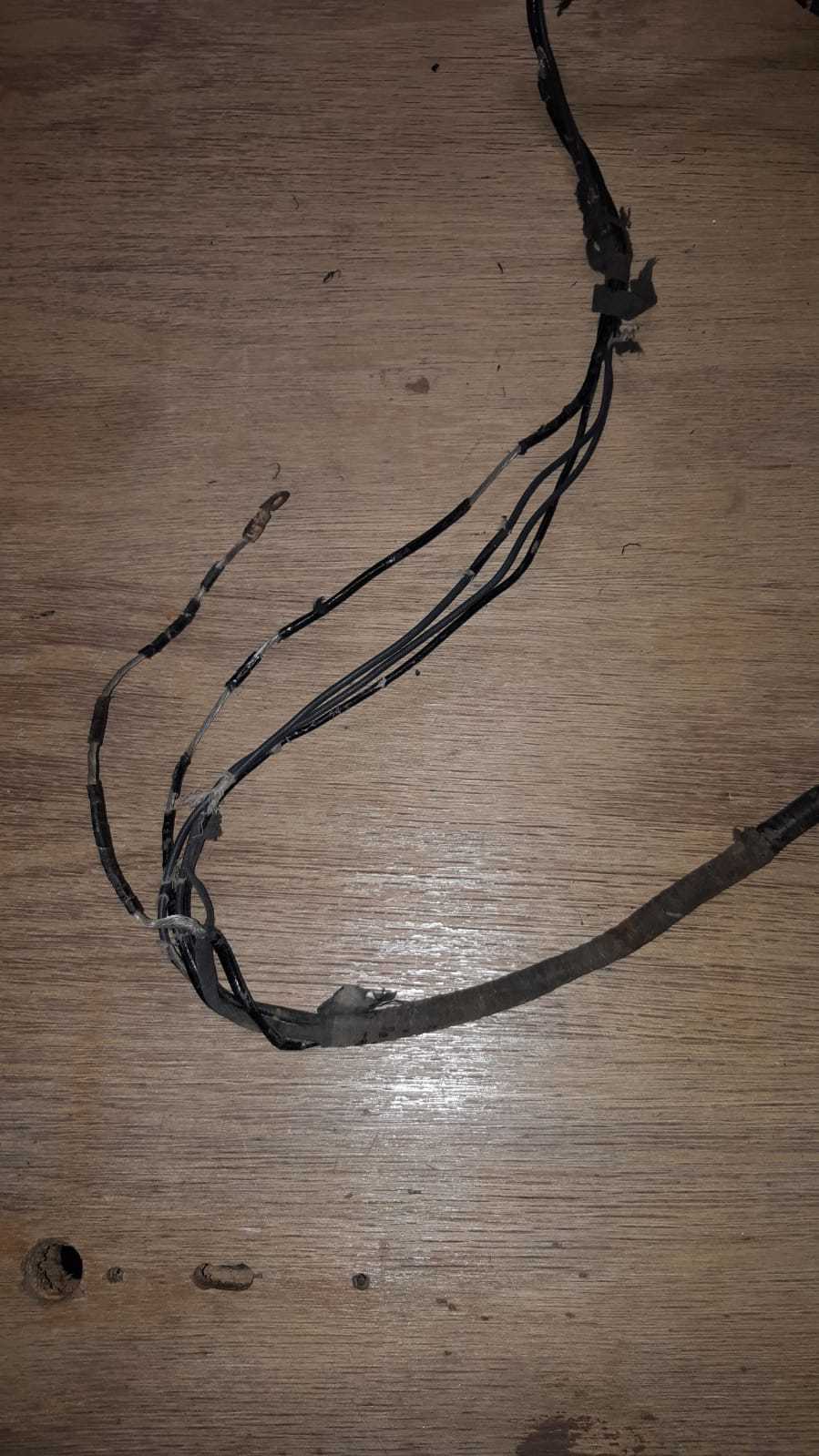
Also pay attention to the insulation and check for damage to the copper core. It is best to replace these wires. Make sure you isolate the copper, for instance with insulation tape or heat shrinkable tubing.
Examples of bad electrical connections
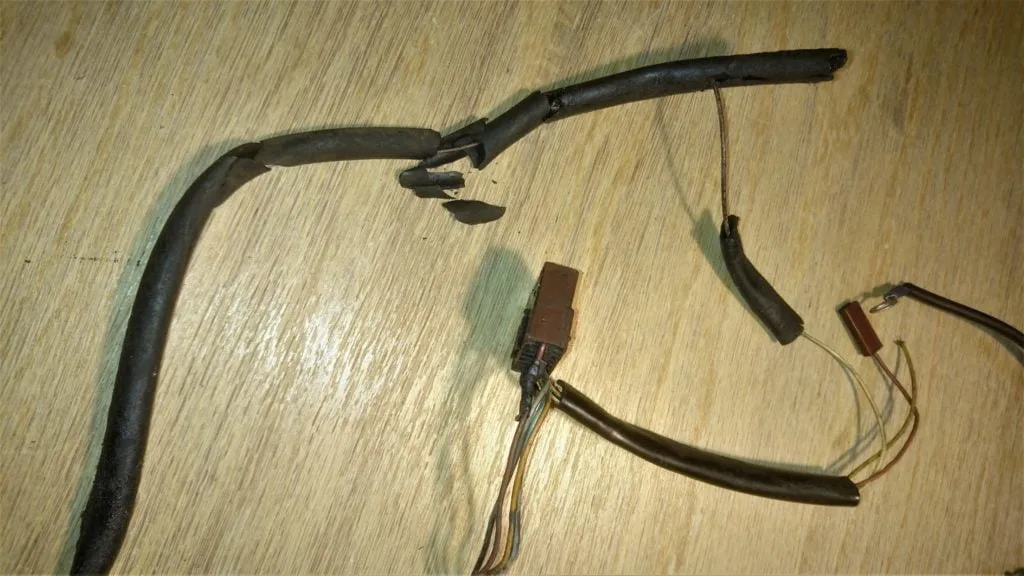
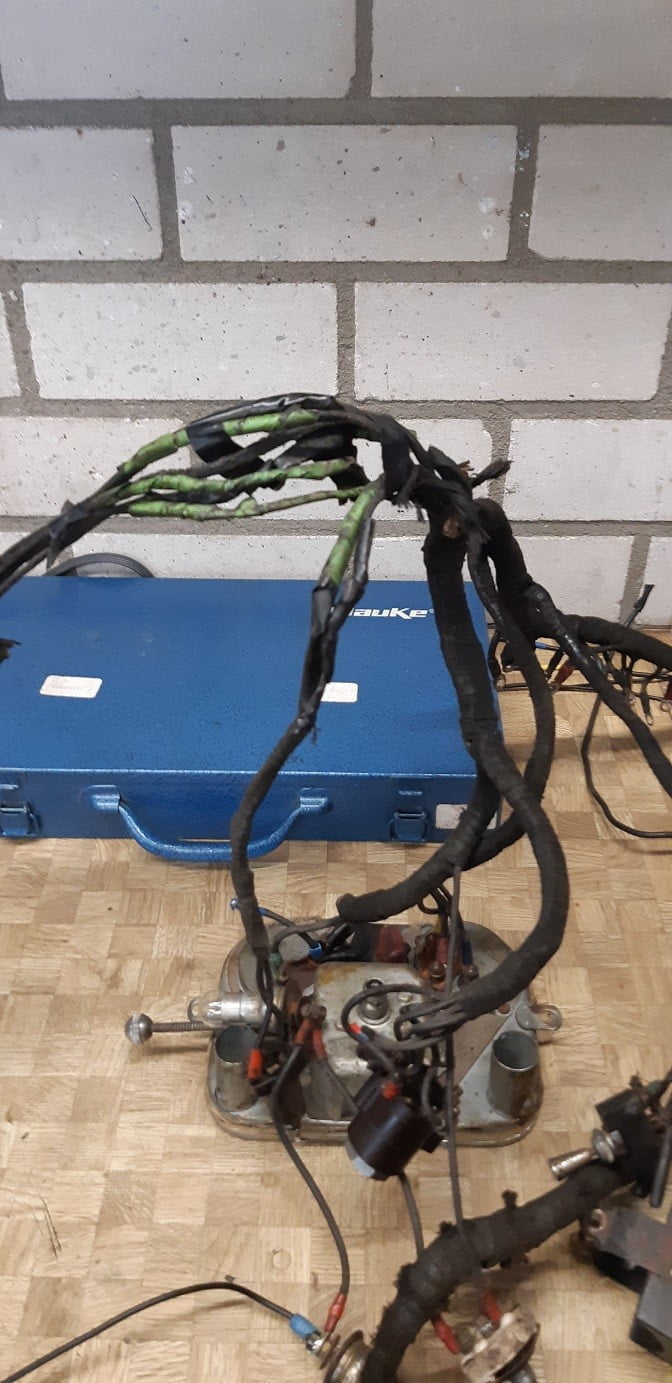
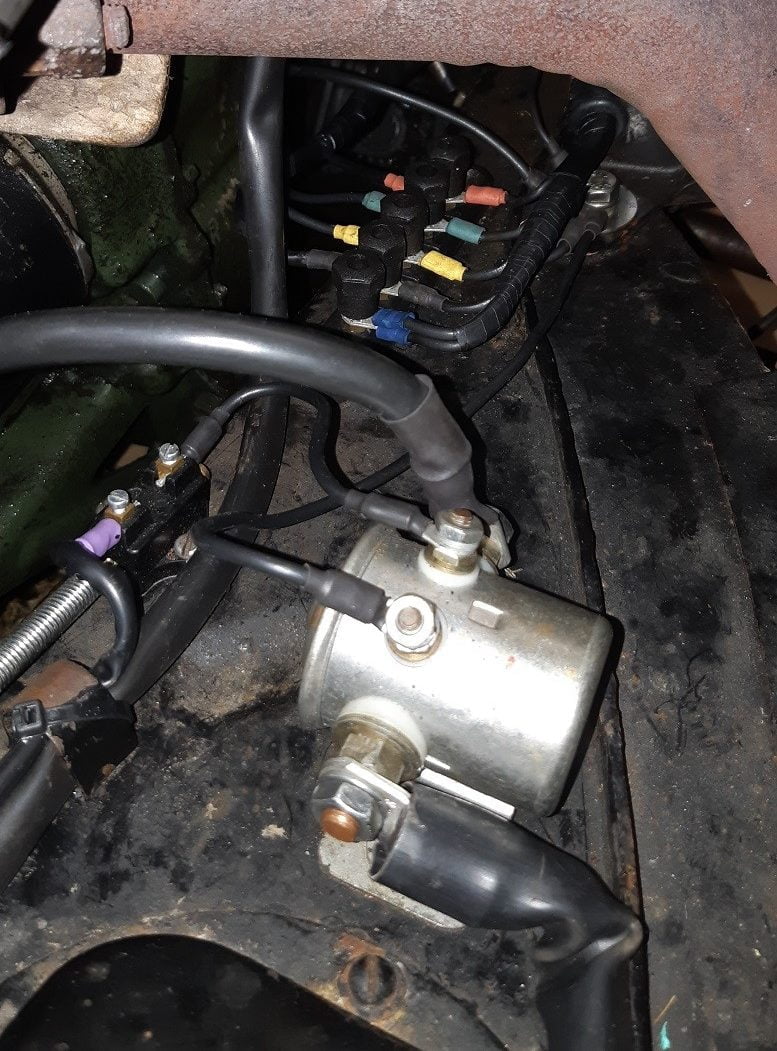
In the pictures below, you can see examples of bad electrical connections. We can see dirty and corroded cable lugs, worn insulation and cable lugs that are still barely attached to the copper wire.
Examples of good electrical connections
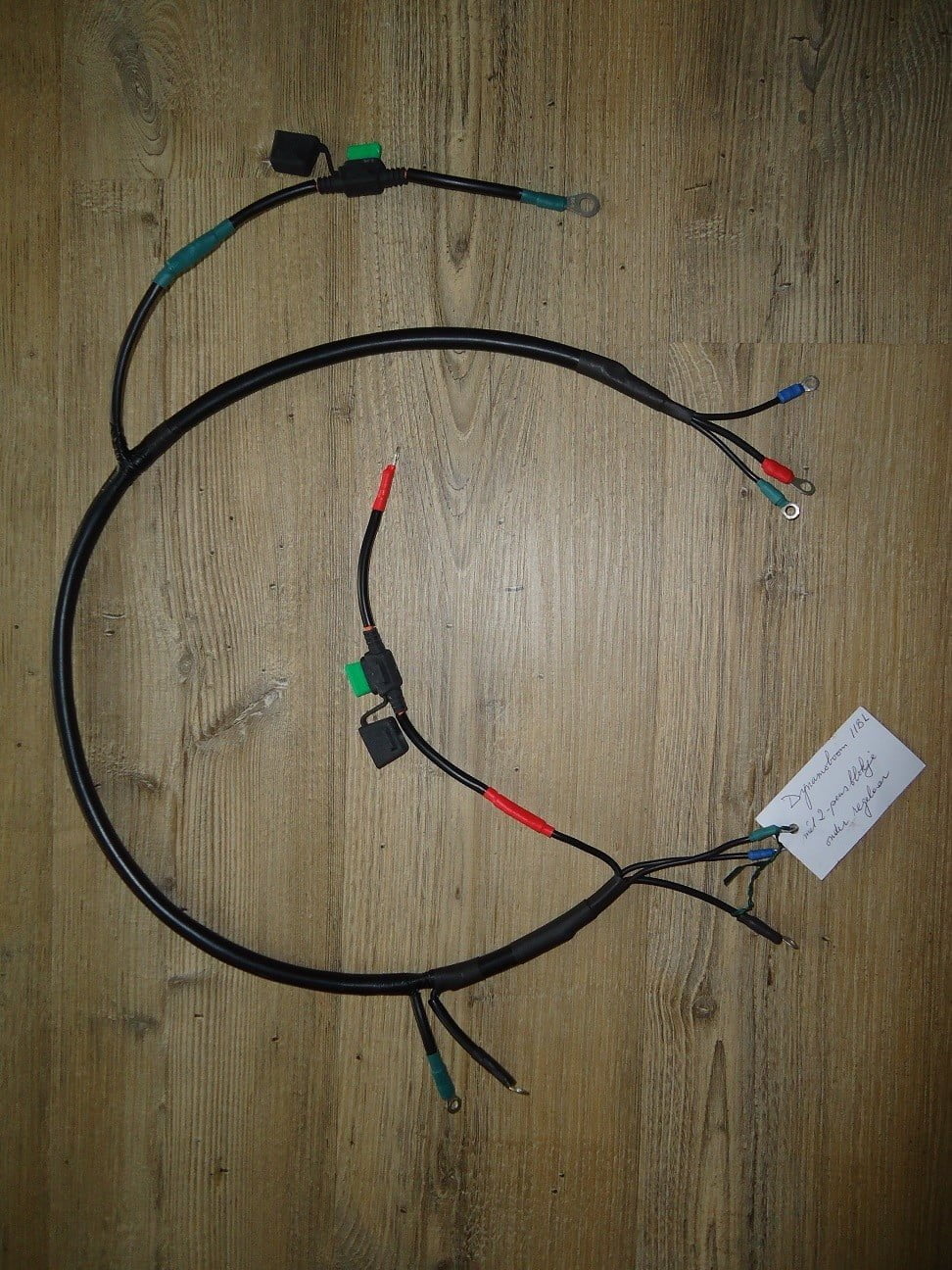
The photos below show how we want it to look for a good reliable electrical circuit. We see undamaged wires there with clean and reliable cable lugs. At SKS, we always apply shrink tubing in the connection between copper wire and cable lug. This greatly extends the service life by providing extra reinforcement and counteracting corrosion.
What we can do for your wiring harnesses
Are you not at all familiar with electricity and do you get nervous at the idea of doing these jobs yourself? Then we can do it for you.
Worn wiring harnesses we can restore, repair and reproduce. The wiring harness will then look beautiful again and function as it should. For really old classics, we can also rebuild the wiring harness from scratch. We have over 40 years of experience and expertise in wire harnesses for Citroën Traction Avant.
In addition, we have over 10 years of specific expertise in wiring looms for Peugeot 205.
We also supply new battery cable sets. We can customize them for all vehicles. Battery cables are the basis of the electrical circuit in your vehicle and should therefore not be forgotten.
In older cars, thin cables such as 6 mm2 or 10 mm2 were commonly used for this purpose. Especially due to the additional wear and tear, resulting in resistance in the cable, this causes electrical components to work worse and worse because they simply receive less voltage. Starting the engine also deteriorates as a result.
It can also cause problems when we install a modern battery that needs a high voltage to charge. The thin cables then prevent the battery from being fully and properly charged, leaving you with a dead battery every so often.
We supply high-quality customised battery cables of a good thickness such as 25 mm² and 35 mm², so you will no longer suffer voltage loss and your battery will be charged properly. You will also notice that the engine will start very smoothly again.
Do you have a wiring harness job for us? Please feel free to contact us for the possibilities.









6 responses
Ciao , scrivo per denunciare un fatto a me accaduto , ho una macchina della Renault ASTRAL di due anni e un mese , una settimana fa ha fatto il tagliando ed è andata bene , due giorni fa la macchina si è bloccata ed è uscito sul displei che ha un guasto motore elettrico , il meccanico della Renault dice che è danneggiato il cablaggio nel motore elettrico . dico appena ho terminato i due anni di garanzia la macchina mi risulta guasta , come si fa ad accettare questo una macchina di 42 Mila auto che ti dovrebbe garantire sicurezza , sono a basita , non so come risolvere questo problema cosi costosa
Good morning,
I own a 1951 Volvo P444 (Katterug). With a 6-volt system. In the engine compartment , small and large terminal blocks are frequently used . Everything works , but occasionally I have small malfunctions . Are there any other connection options than heat shrink or soldering . It's hard to reach. Is there a modern version of terminal blocks?
What is the approximate cost of replacing a complete wiring harness in this car?
This is described in the article under the heading 'Look for wire breaks' > https://www.kabelbomen.com/kabelboom-slijtage-en-elektrische-storingen/#elementor-toc__heading-anchor-9
Dag Antoon, don't stare blindly at the 2-year warranty period. Dutch law states that a consumer has a right to a properly functioning product, during the expected lifetime of the product. Delve into this, it's worth it!
Attached to get into it:
https://www.anwb.nl/juridisch-advies/koop-en-onderhoud/klachten-na-aankoop
I myself, after 7 years with Renault, managed to get an electronic fault message fixed for free. Thanks to the conformity principle!
Hello
With great interest I have read article about oxidised cables in a car. Amazing Is that my Peugeot 2008 of 2020 and 30,000km Just outbde 2 year warranty period and has given malfunctions in the operation of the outside mirrors , they no longer went in or out and swabbed. Were still adjustable though.
The dealer initially could not find the cause and now after 3 days decause blames the highly oxidised cables running through the door to the mirrors. Has replaced these and cause is solved .
However, the cost to me is over 600 euros as the cause of the oxidation would be due to me because of accumulated dirt at the cable passages and humidity .
Surely this cannot be down to me , then my car could not be left outside , or cleaned in a car wash , which I do every 2 weeks.
I believe this repair should go on goodwill from Peugeot , especially for a 30-month-old car . The dealer however thinks not , what is your technical opinion .
Thanks for your response Antoon.
It is indeed fast for a new car to show corrosion after only 2.5 years. This could have several causes. Perhaps a crack developed that let moisture through. It could also be a production or design fault, in the latter case it will undoubtedly occur in several 2008s from that year. In the service booklet, I'm sure it says somewhere that everything should be kept dry and clean, which they can always refer to. We unfortunately cannot be between your dealer's decision.
Greetings Jesper